Lurking around Leicester, hidden in this historic city, there are Lost Legends…

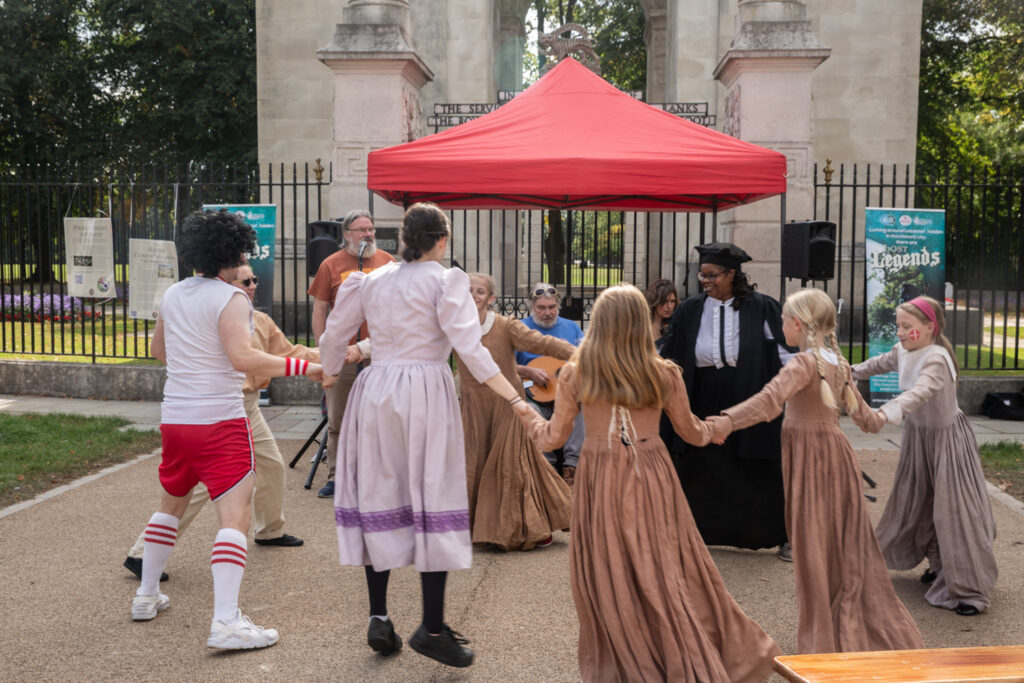
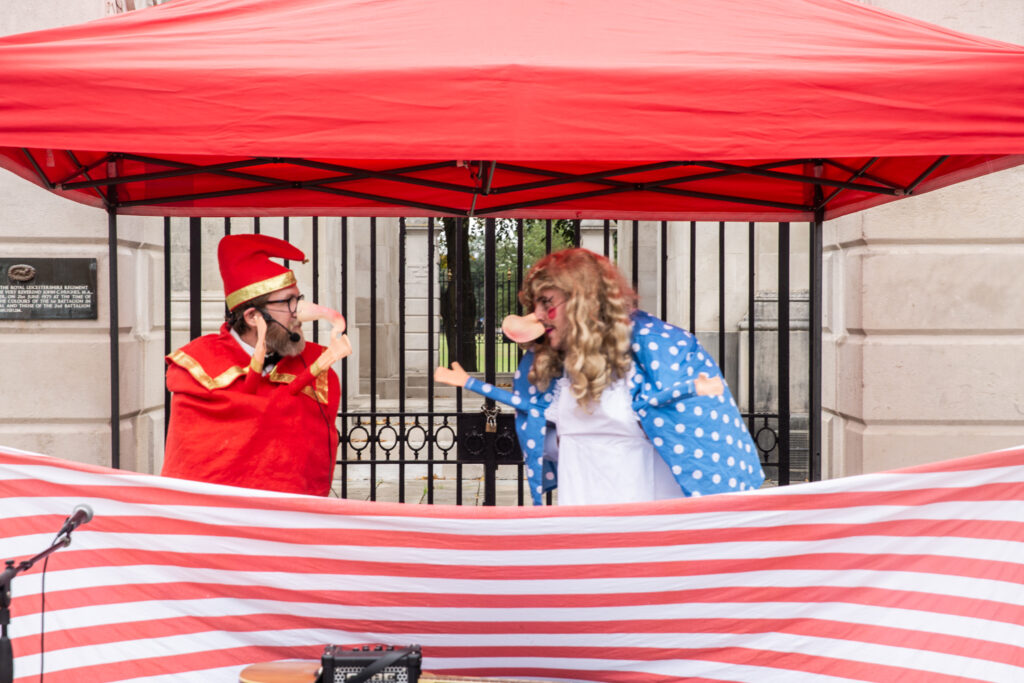
The Lost Legends of Leicester Heritage Project was funded by The Y Theatre as part of ‘Kick the Dust’ Heritage funding. The project worked with 13-25 year olds to explore lost tales and legends of Leicester, working with local folklore musicians and historians. Bringing to life forgotten stories of myth and momentously worthy moments in Leicester’s history, the project resulted in a family Heritage event day, ‘Hobs’ puppetry show and a short film ‘Lost Legend of Leicester Black Annis.
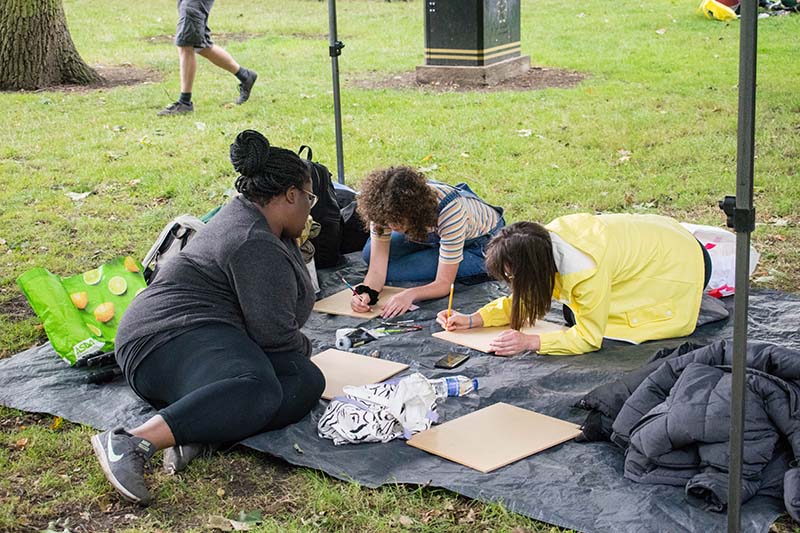
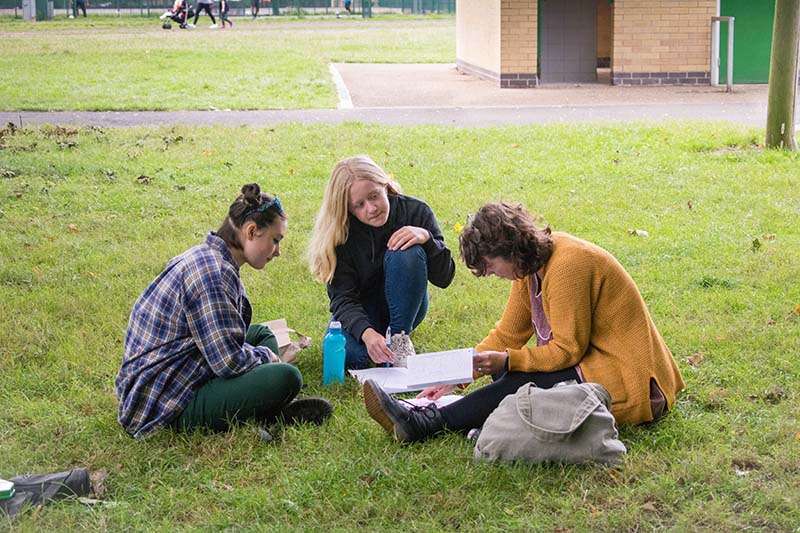
The young people working on the project were nicknamed our ‘Parliament of Bats’ attending workshops over the summer as part of the production team and researchers, choosing the stories that featured in the celebration of heritage. See some of the wonderful work created below, and learn all about those Lost Legends of Leicester.

What is the Parliament of Bats?

In the year 1426, during the reign of Henry VI, the political atmosphere in the country was highly charged, owing to a quarrel between two of the young King’s closest relatives and counsellors, Henry Beaufort, Bishop of Winchester, and Humphrey, Duke of Gloucester, in which other Lords took sides. There were fears that Parliament meeting at Westminster might lead to violence.
In an attempt to find a neutral venue for Parliament to meet, it was decided that Leicester Castle would be the location. Even in Leicester, a stronghold of the ruling house of Lancaster, there were concerns about outbreaks of violence among the various Lords. Every man was warned that they should leave their swords, shields, bows and arrows in their inns. This, however, did not deter those intent on a fight. The Parliament armed themselves with wooden bats and was referred thereon as the Parliament of bats.

The Parliament of Bats workshops
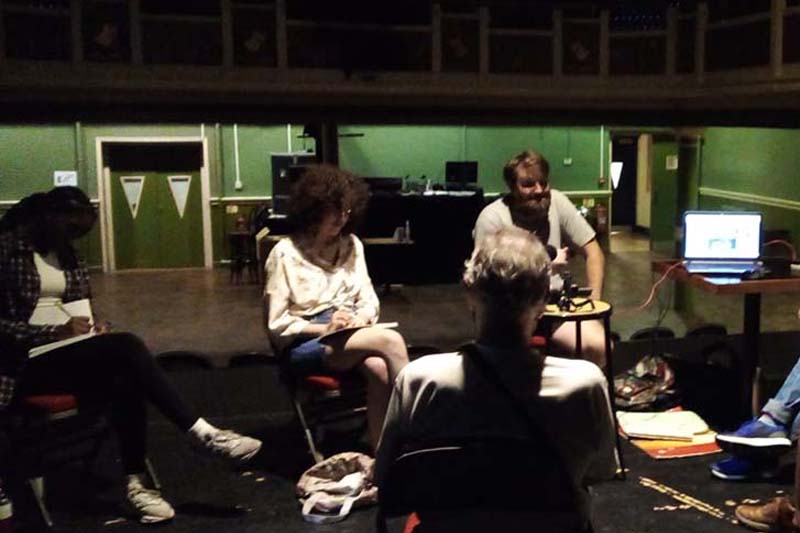
The project included weekly workshops where our ‘Parliament of Bats’ worked with theatre makers, filmmakers and puppeteers, planning the heritage event and creating a short ‘Hobs’ puppetry show and film about the legend of Black Annis. The group received masterclasses from oral historian Colin Hyde from the East Midlands Oral History Archive and musicians & folklorists Steve Cartwright and David Taylor. The Parliament have explored all of the legends featured at the event, as well as planning all of the legend themed activities.

The Lost Legend of Leicester Black Annis

Who can transform into a cat and eats children? It’s Black Annis, of course! But is there more to Black Annis than a bogeywoman tale? Was she a blue-faced child eater, hermit nun or a slandered ancient goddess? The legend of Black Annis has been told in the short film above created by the Parliament of Bats on Bradgate Park where Black Annis has said to have lurked.

The Legend

Location: Dane Hills, Leicester

Time period: Unknown (old English folklore)

The Legend:
Black Annis is the blue-faced bogeywoman of Leicestershire. Tales tell of her long, razor-like claws and taste for eating the flesh of naughty children. She sucks the bones out of her victims and then hangs their skin upon an oak tree near her cave.

Stories of Black Annis have been told for hundreds of years to the misbehaving children of Leicester. Rumoured to dwell in a cave in the modern-day area of Dane Hills. Annis’ cave was even marked on the first Ordnance Survey map of Leicester. Homes were even built with small round windows to stop her from reaching in and snatching sleeping children.

As well as targeting unruly children and spooking passers-by, other tales tell that she had a tunnel to Leicester Castle and would pounce down from Rupert’s Gateway. The earliest written account of “the old hag” comes from a poem completed in 1797 by John Heyrick, a lieutenant in the 15th Regiment of Light Dragoons.

‘Tis said the soul of mortal man recoil’d, To view Black Annis’ eye, so fierce and wild; Vast talons, foul with human flesh, there grew In place of hands, and features livid blue Glar’d in her visage; while the obscene waist Warm skins of human victims close embraced.
Where down the plain the winding pathway falls, From Glenfield Vill to Lester’s ancient walls, Nature or Art with imitative power, Far in the glenn has placed Black Annis’ Bower. An oak, the pride of all the mossy dell, Spread its broad arms above the stony cell; And many a bush, with hostile thorns arrayed, Forbids the secret cavern to invade; Whilst delving vales each way meander round, And violet banks with redolence abound.’

Black Annis may have been inspired by a late medieval era nun called Agnes Scott. Anges lived a life of solitude and prayer in a cave in the Dane Hills and cared for a colony of lepers. Some have linked Black Annis with the pagan goddess Anu. Early British Christians may have vilified Anu by creating the gruesome tale of Black Annis we know today.

A Hob’s fable of the Beeby Tub!

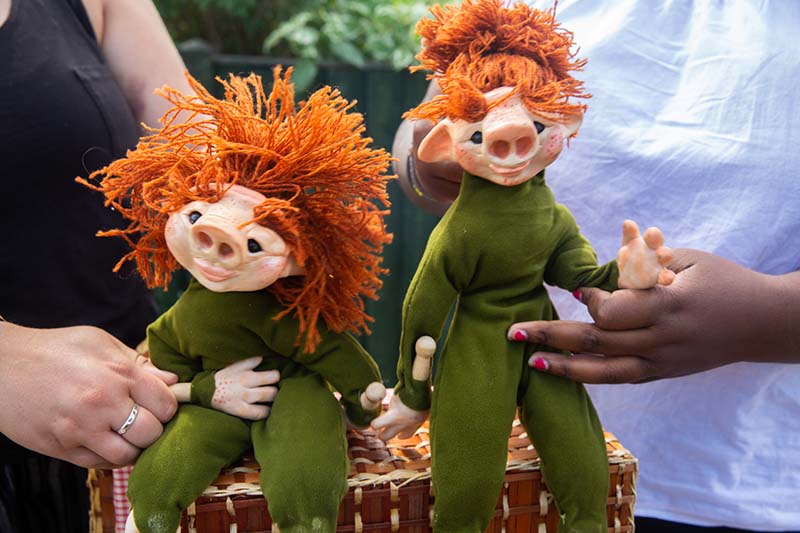
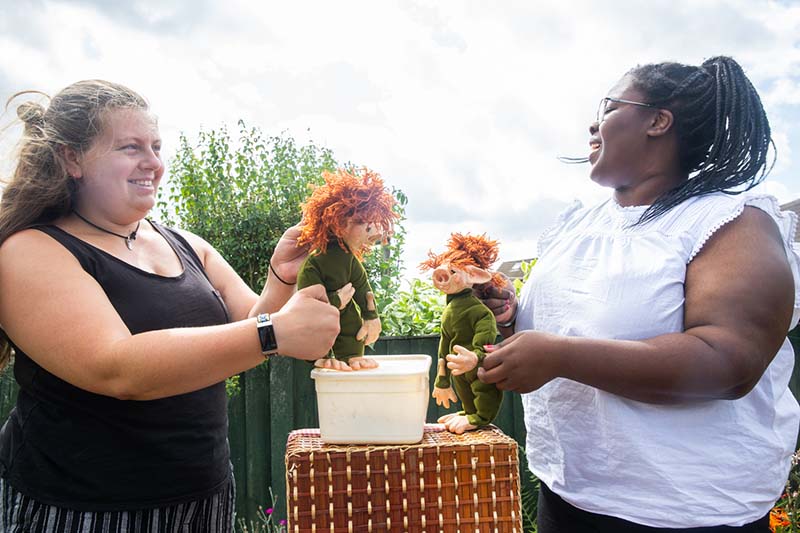
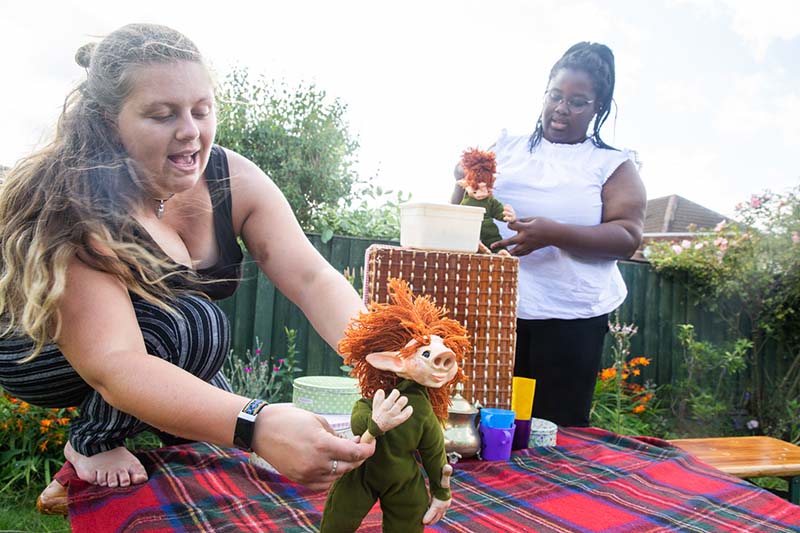
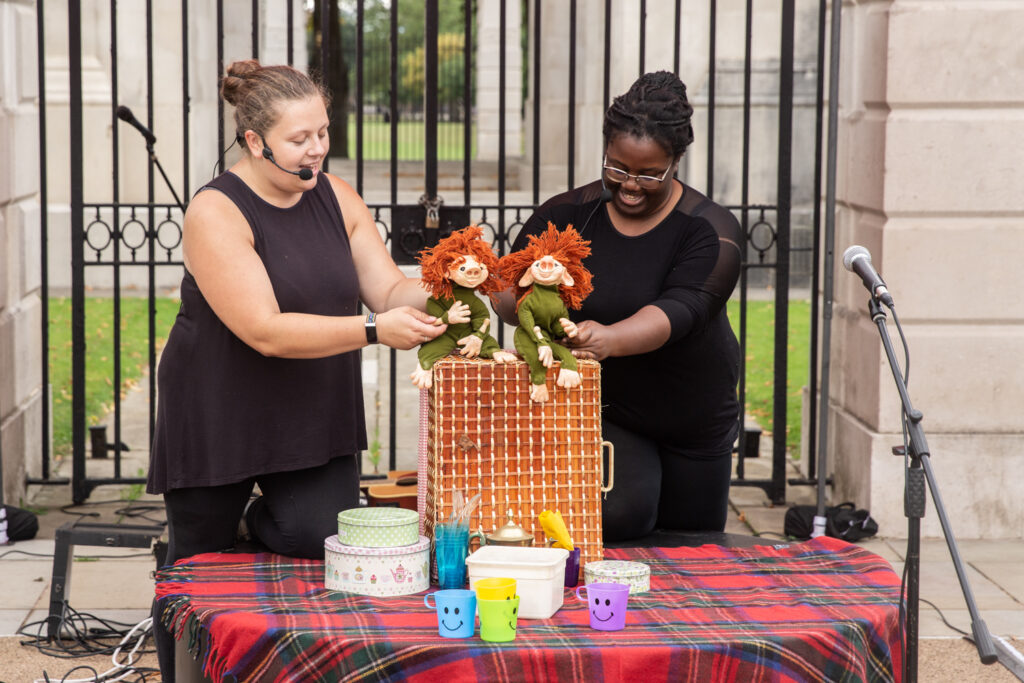
What’s small, hairy and likes to help out around the house?… It’s a Hob of course! And our Hob puppets told a fable of the Beeby Tub as a short live event show, learn their little moral tale in this short film of the Hobs puppet show created by project participants Charlotte Jarvis and Georgina Payne.

What is a Hob?

A Hob is a type of small mythological household spirit found in the north and midlands of England. Hobs work in farmyards and houses, preferring to be about at night. They could help complete domestic tasks; however, if offended, they could become nuisances. The usual way to dispose of a hob was to give them a set of new clothing, the receiving of which would make the creature leave forever. Hob’s are often described as small, hairy, wizened men. Hob folklore was the inspiration behind the character of Dobby the house-elf from the Harry Potter series.

Family Heritage Event Day

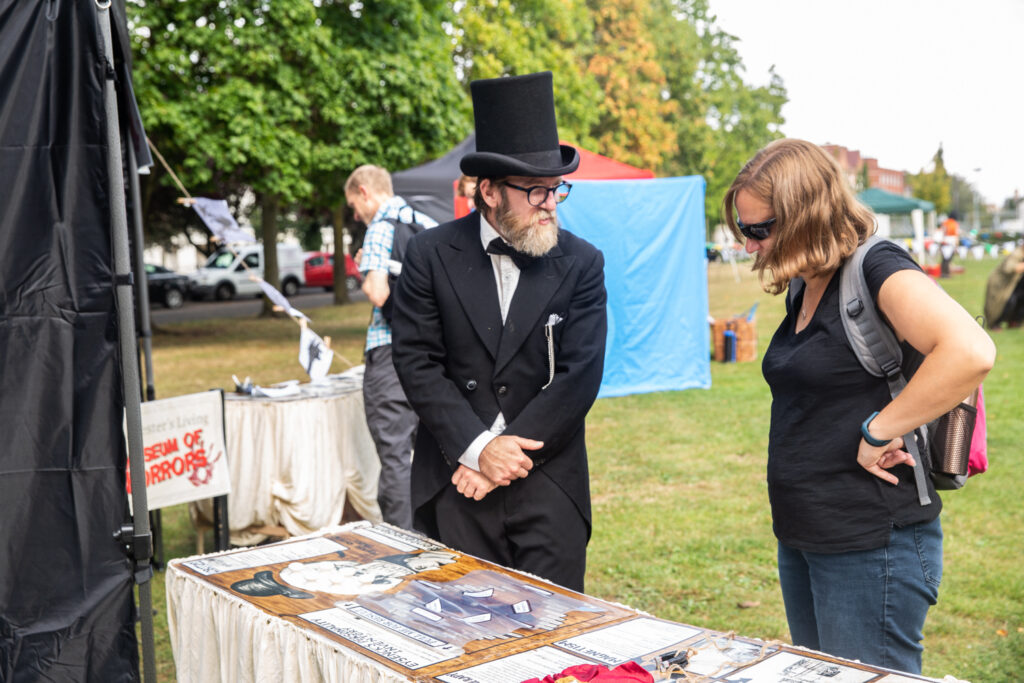
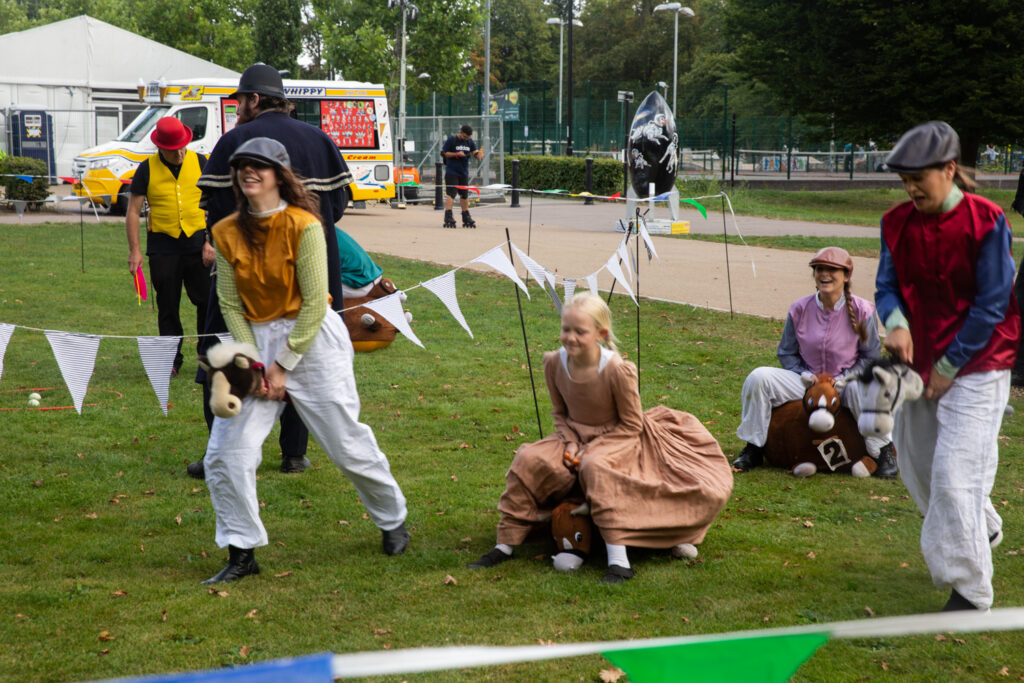
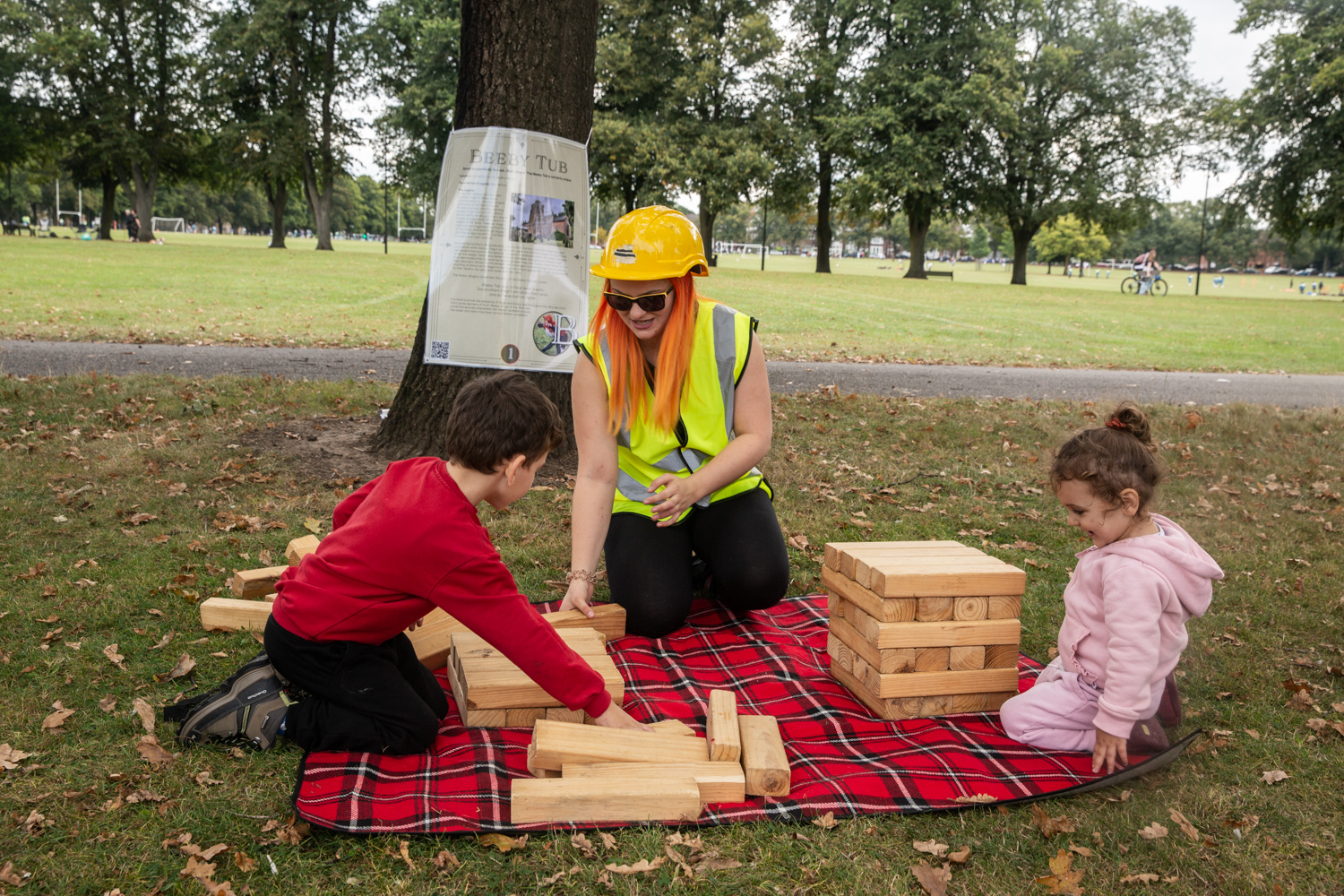
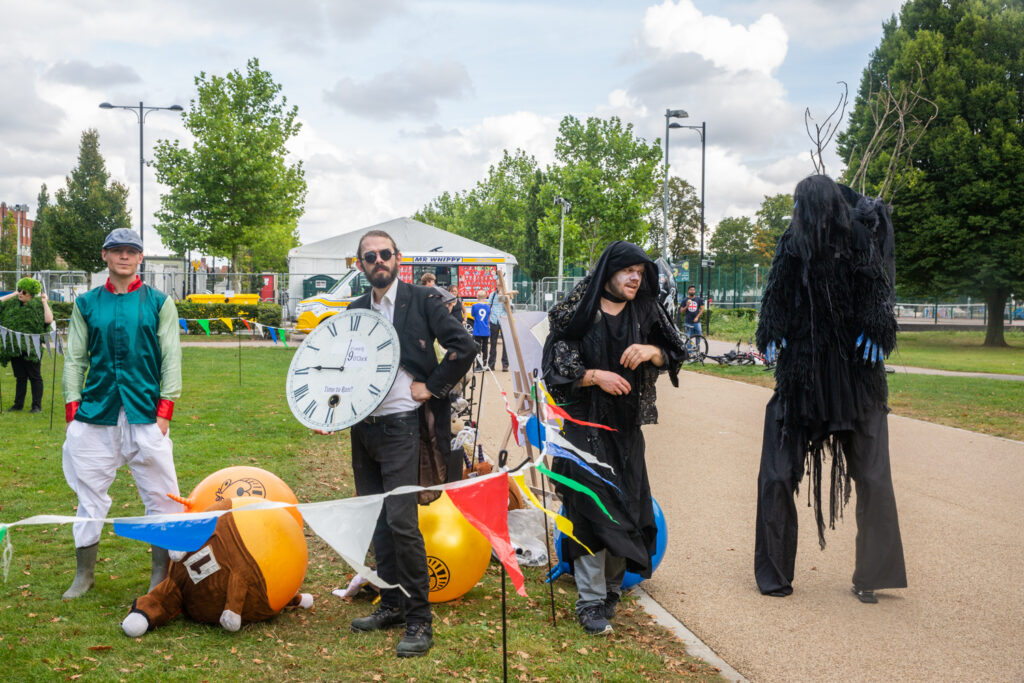
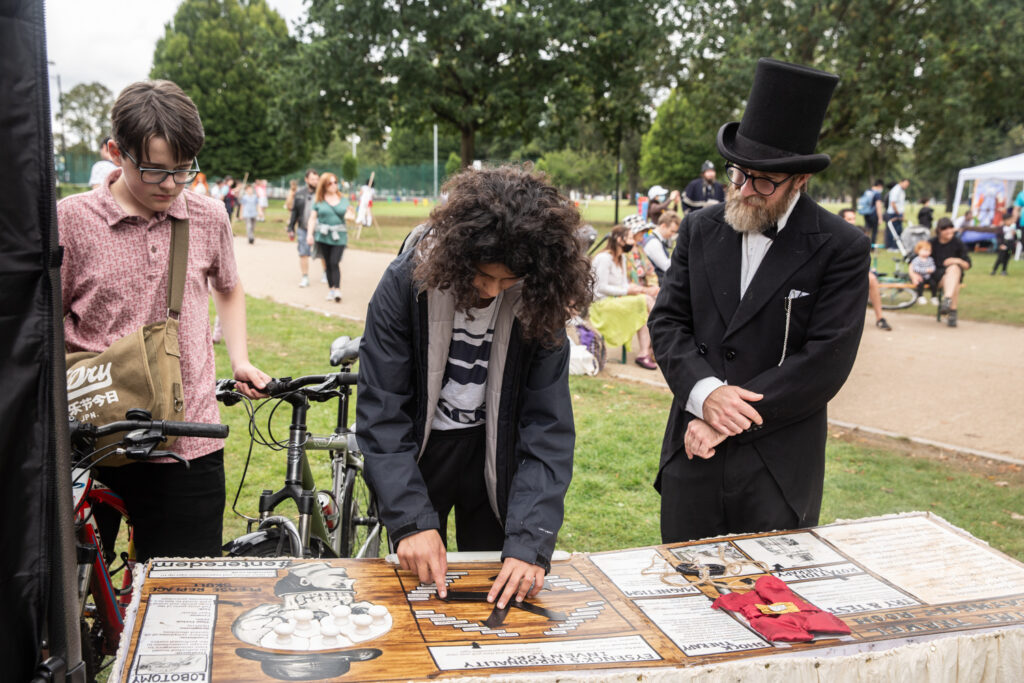
The fantastic family Heritage event saw bonkers games, live music, shows and much more. The event featured the Heritage research through games and activities, such as Daniel Lamberts Sports Day and the 9 O’Clock horse races. Disguising yourself at Tankys Smiths Secret Service, learning a trick or two at Tuby’s Convict Circus. You could visit Ada Lovelace’s School Room, or take a flight in Henry Coxwells Balloonatics Aviation area. Those brave enough could visit the horrible history in ‘Leicester’s Living Museum of Horrors,’ where the beheaded Lady Jane Grey and many other stories were told.
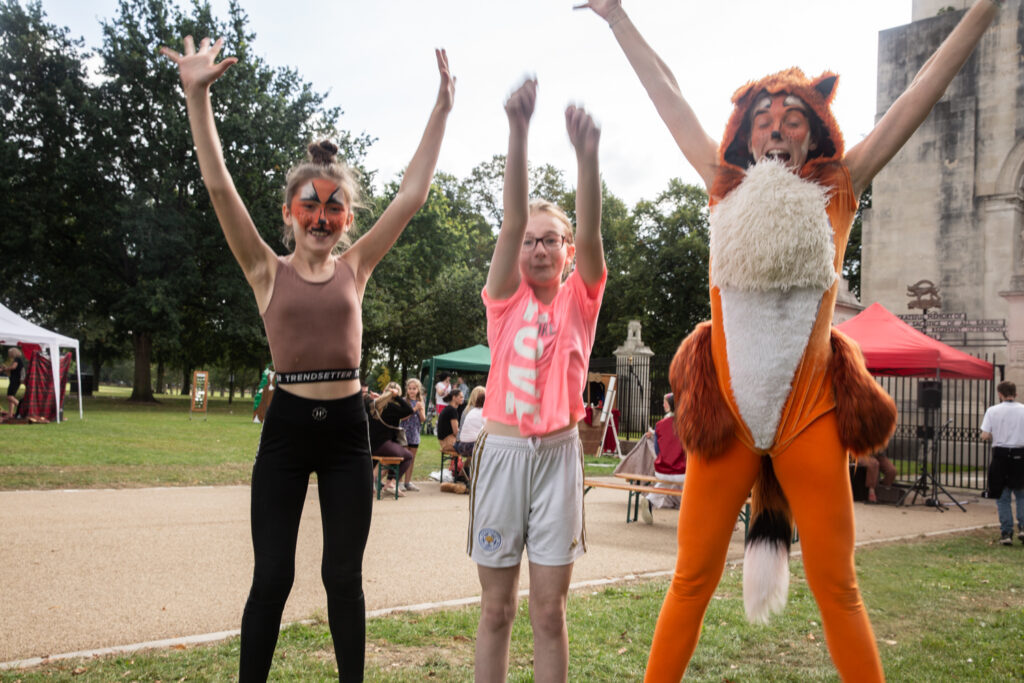
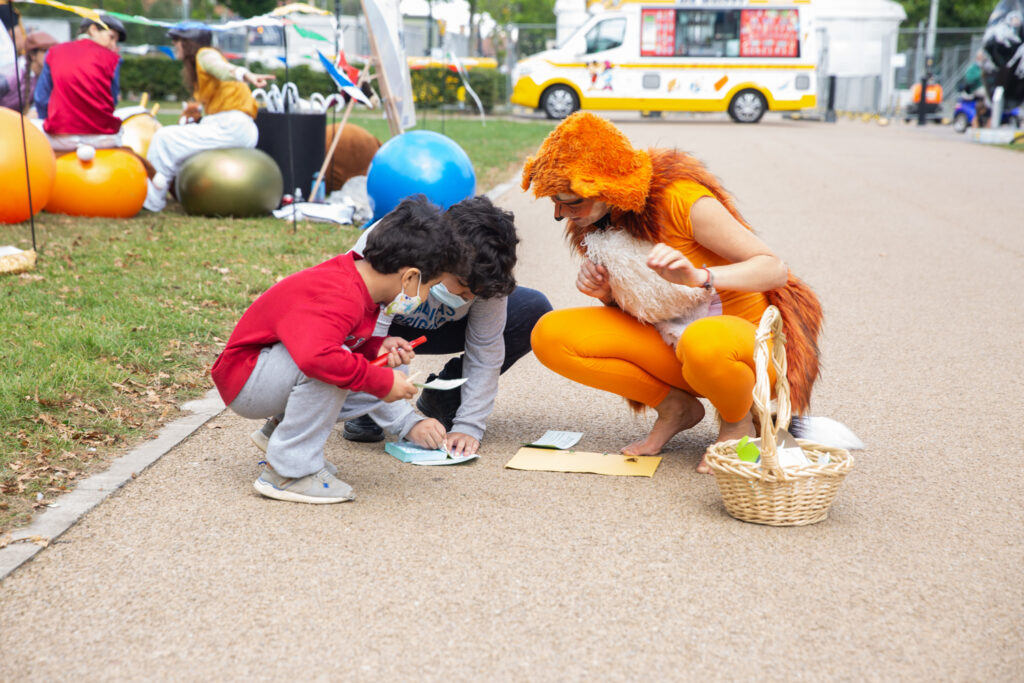
You could also see as she ventured out of her cave the legend in real life Black Annis! The discovery of the Legends was made into the ‘Viccy Park Fox Hunt’, a free prize draw for Lost Legends goodies, collecting the missing letters in a fun treasure hunt style game while discovering the Hertiage stories to enter.

The Legends Explored

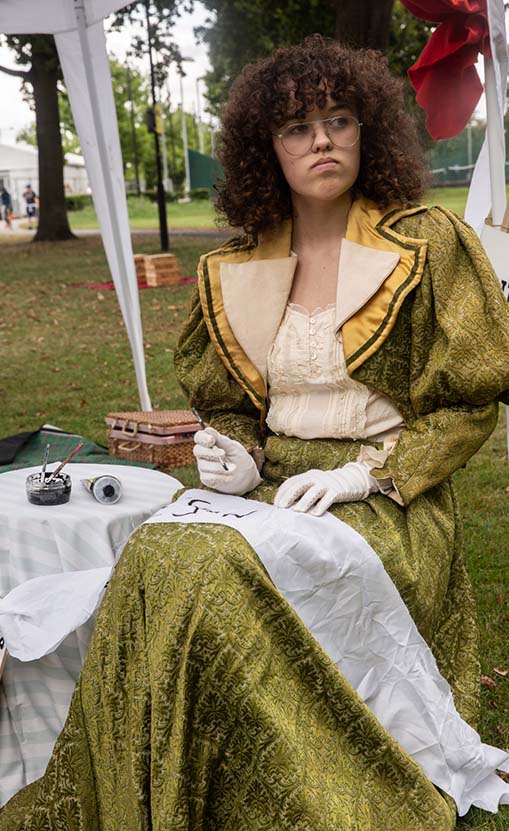
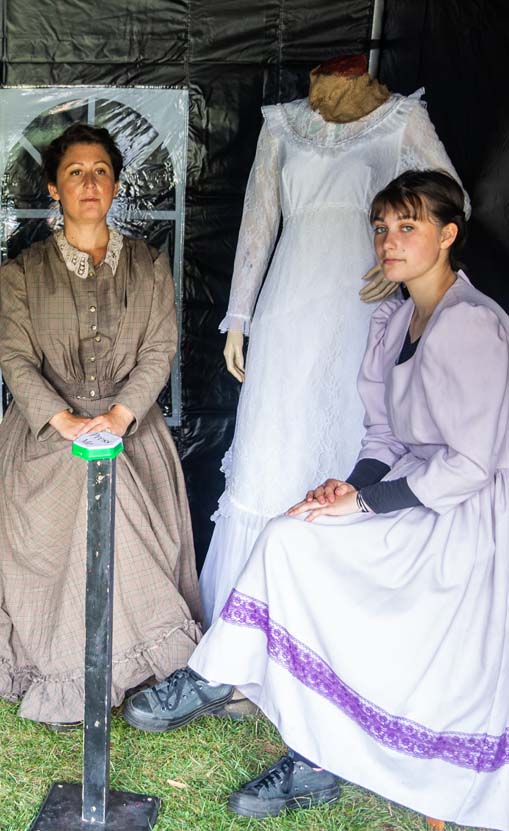
These legends and stories below were brought to life with costumed actors playing the roles of the Heritage research legends. With the Parliament of Bats and other youth groups performing as part of the production team to share the Heritage in the community.

Tubbys Convict Circus

‘Ello ‘ello ‘ello.

What have we got here then?

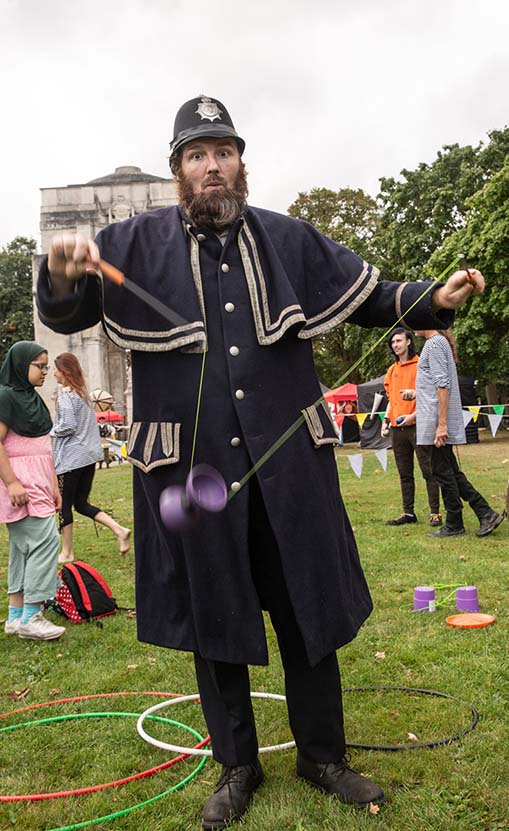
Why if it isn’t Leicester’s laughing policeman. I wouldn’t mess with PC Tubby Stephens, would you?

He had his Convicts teaching a few tricks at the event in a fun circus zone.

PC Tubby Stephens

Location: Leicester

Time period: 1857 – 1908

The Legend:
John William Stephens, later known by the nickname ‘Tubby Stephens’, was a Leicester celebrity in Edwardian England. The name ‘Tubby’ was a result of John’s weight of 24 stone and large stomach. He was the heaviest serving police officer in Great Britain, leading to him becoming a tourist attraction. Postcards were even sold of Tubby Stephens stood in front of the clock tower, his regular post to patrol in the city.

After a military career, John joined the Leicester Police Force in 1886. He soon became a popular member of the community, famed for his friendliness and sense of humour. John used his wit and size when patrolling the streets of Leicester, moving loiterers by bumping them with his stomach until they moved.

PC Tubby Stephens’ popularity was shown following his death in 1908, when a reported 20,000 people lined the streets of Leicester to show their respects at his funeral procession. Tubby Stephens was laid to rest in an unmarked grave at Welford Road Cemetery.

It is claimed, PC Tubby Stephens is the inspiration behind the 1922 Music hall song ‘The Laughing Policeman’ by Charles Penrose.

A descendant of Tubby Stephens, his great-great-great-grandson, has followed in his career footsteps by joining the Leicestershire police in 2020.

Tanky’s Secret Service

A Bishop and a Jockey walk into a Leicester tavern…

Don’t worry, it’s not a bad joke, just two of the disguises of ‘Tanky’ Smith, Leicester’s very own Sherlock Holmes. You could pop on a disguise at the Lost Legends event in a fun face painting and photo area.

Tanky Smith

Location: Leicester and across Europe.
Time period: 1814-1888
The Legend:
Francis Smith was born in Leicester in the year 1814. He grew up from very humble beginnings; his family home was a one-up one-down terrace house without a kitchen or bathroom. He would become known as ‘Tanky’ during his time as a police constable. Perhaps, because of his alleged fondness for ‘tanking’ or tapping ne’er-do-wells on the head with his cane.
1800’s Leicester had a reputation for being a lawless city. Gangs, robbers, burglars and all sorts of wrong’uns terrorised the local population. To combat the crime wave Leicester Borough police force was founded in 1836, working from the guildhall. At age 26, Tanky joined the police force as a lowly Constable in 1840. At the time, Constables worked 7 days a week for 3 shillings a week (about £10 in today’s money!).
Alongside his colleague Tommy Haynes, they became known as Leicester most successful police officers. Tanky was highly regarded for his memory, fearlessness and investigation skills. He and Tommy Haynes would eventually be promoted to Inspectors in 1853. It was during his role as an Inspector that Tanky would achieve his best work. He became a master of disguise and had 16 in total, including a Bishop and two separate Jockeys. Using these aliases, he managed to infiltrate Leicester’s criminal underworld, preventing crimes before they had even been committed.
In 1862, Tanky was called upon to solve his biggest ever case, all be it as a private detective. Following a family row, the High Sheriff of Leicester, James Beaumont Winstanley went missing. The Winstanley family hired the services of Tanky to track James down. From an initial tipoff at London Road train station, he travelled to Folkestone. A man of Winstanley’s description had boarded the ferry to Calais. His travels then took him to Paris and then to Germany. After speaking to the local police, ‘Tanky’ heard that an unknown Englishman had fallen from a ferry and drowned, and was buried in a local churchyard. The body was exhumed and identified by a member of the Winstanley family.
Tanky was rewarded £1000 for his work. With his earnings, he built 4 houses on London Road. The building would become known as Top Hat Terrace, in reference to the top hats worn by two of the sixteen busts of Tanky in his disguises on the front of the building. All sixteen of the likenesses can still be seen today on London Road.
Tanky would leave the police force in 1863, claiming his failing eyesight and strength. Although, he would depart under a cloud of accusations of misconduct. Oh, he was a maverick, but he got results! After leaving the police, Tanky would continue to work as a private detective. He would pass away aged 73 in 1888.
Francis ‘Tanky’ Smith was said to inspire Arthur Conan Doyle’s Sherlock Holmes character.

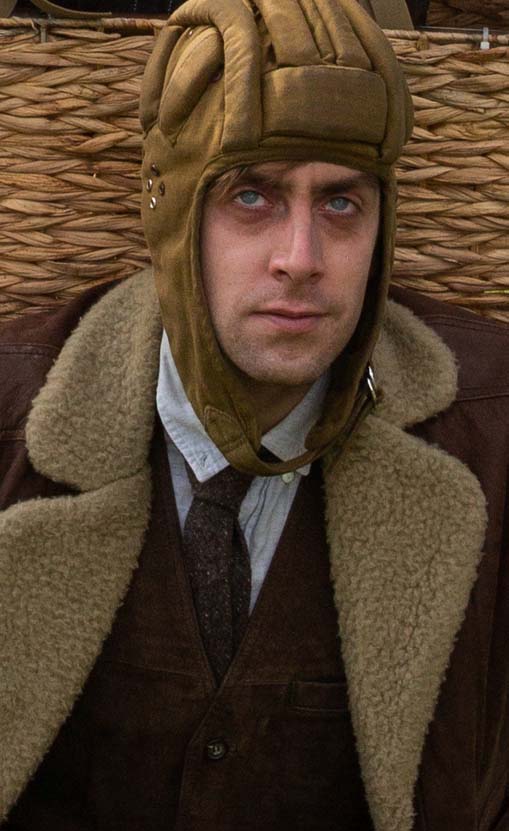
Henry Coxwell’s Balloonatics Aviation

Is it a bird? Is it a plane? No, it’s the sight of 50,000 rioters destroying the pride and joy of world-famous aeronaut Henry Coxwell.

Bleedin’ Nottingham lot, coming down ‘ere and causin’ trouble! The story of Henry Coxwell was told with shadow puppetry and a Balloonatics riot by youth group the Kirby Juniors.

Henry Coxwell

Location: Leicester racecourse (Now Victoria Park, Leicester).

Time period: July 11th,1864.

The Legend:
The world-famous aeronaut and former dentist, Henry Coxwell, caused great local excitement when he attempted to demonstrate the flight of his largest and newest balloon. 50,000 members of the public came to witness the event. Leicester police supplied only 8 officers to marshal the display.

The public arrived at 4 pm, but they were made to wait until 6 pm before the balloon was filled with gas. As the balloon was presented to the public, the balloon began to deflate and flap in the wind. The smell of the escaping gas causing the already impatient crowd great distress. The 50,000 in attendance had already started to grow restless earlier in the afternoon when someone created a rumour that the balloon was not Coxwell’s largest. This allegation spread amongst the 50,000 in attendance, and they believed they were being taken for mugs by Coxwell.

The crowd turned violent and rushed towards Coxwell and the balloon. The feeble police presence was no match for the angry mob, who were helpless to stand witness to the balloon being torn to pieces. Coxwell was not spared from the violence either the aeronaut had to flee for his life. He would later refer to the inhabitants of Leicester as “Balloonatics” The people of Leicester would blame the riot on day-trippers from Nottingham.

9 O’clock Horses

Is that the sound of a horse and cart I hear? Quick, check what time it is! The Heritage of Victoria Parks race course had a little 9 O’clock Horse legend twist, with a living race course!

9 O'Clock Horses

Location: Leicester

Time period: Victorian era

The Legend:
Children have been told tales of monsters, dangerous beasts and ghosts to coerce good behaviour since the dawn of spoken language. But since the Victorian era, Leicester has had its very own twist on the boogeyman. Tales of the child-snatching 9 O’clock Horses have been told to Leicester’s young as a cautionary tale about what happens to children who are not in bed by 9 pm. It is a legend that may very well have some truth to it.

Victorian era Leicester had no sewers or proper waste disposal system. Instead, locals and businesses would dump rubbish, the remains of animals and human waste in the streets and rivers of the City, leading to all sorts of deadly outbreaks. The rotting piles of human and animal waste were collected by resourceful farmers for use as fertiliser. City officials were only too happy to have the waste, politely referred to as ‘soil’, collected by the farm labourers on their horses and carts. But the City insisted that the farmer could not remove the waste until after 9 O’clock, once the streets were dark and empty. The farmers were thus known as the 9 O’clock Horsemen.

During the industrial revolution of the Victorian era, many rural farm workers moved to the cities in search of work, leaving labour shortages on farms. Soon after the arrival of the 9 o’clock Horses, rumours began to spread through the streets of Leicester. Whispers of children being snatched by the 9 o’clock Horsemen, to be used as slave labour in the fields of Leicestershire. Victorian attitudes to child labour were vastly different to today. Farmers were legally only required to provide food and lodgings to children.

Leicester’s Suffragettes Story & the Living museum of Horrors

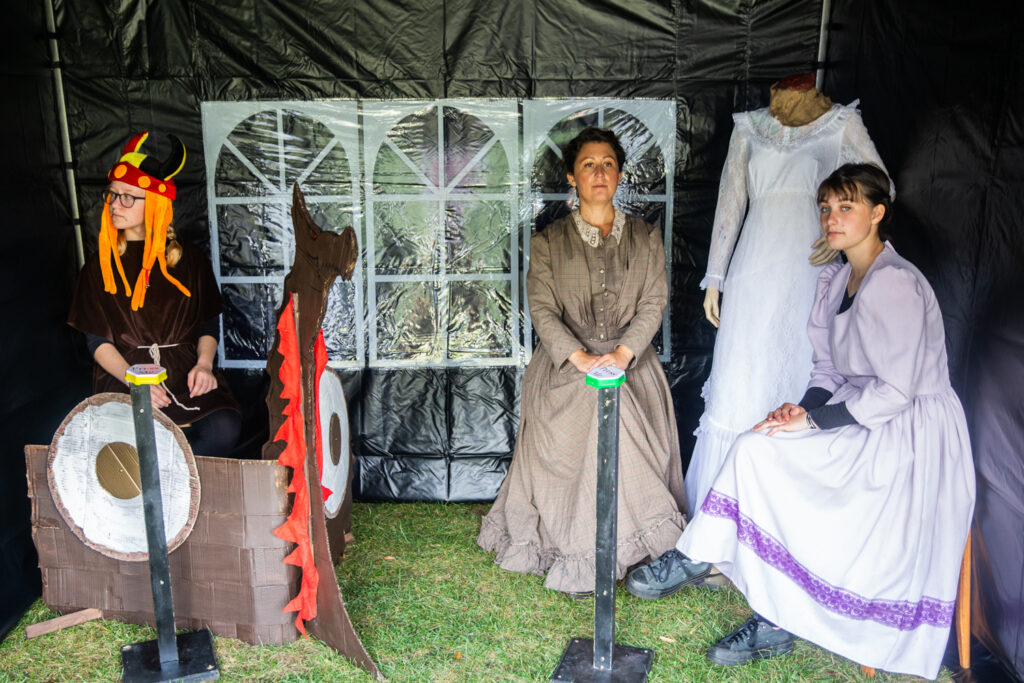
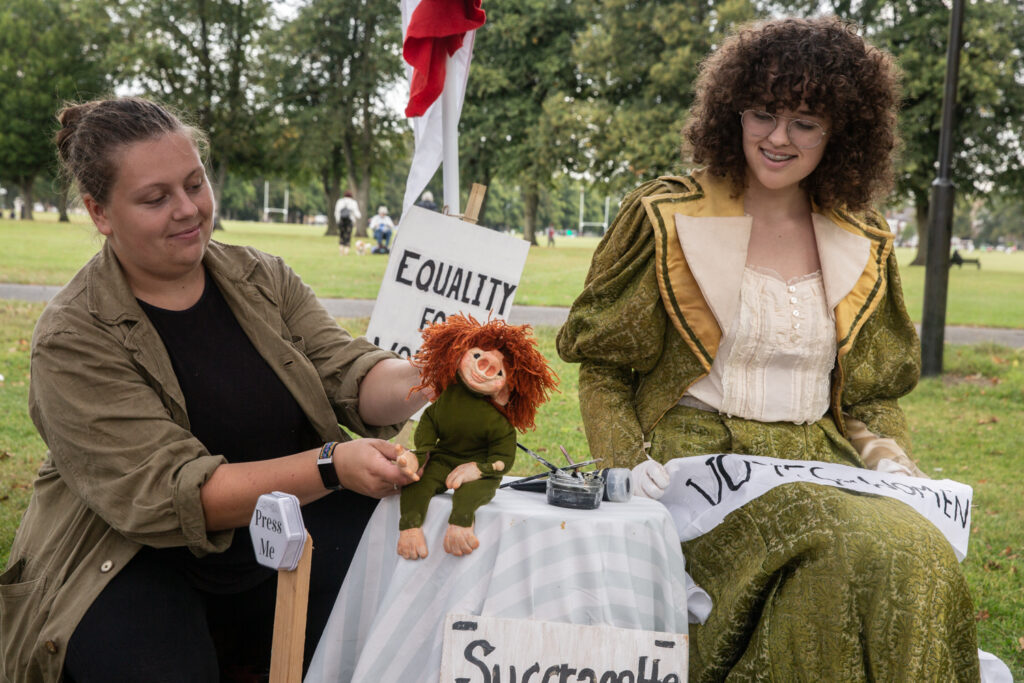
Parliament of Bat Beth Wainwright played Alice Hawkins, creating her suffragette sash after being passionate in sharing Leicesters Suffragette Story. 

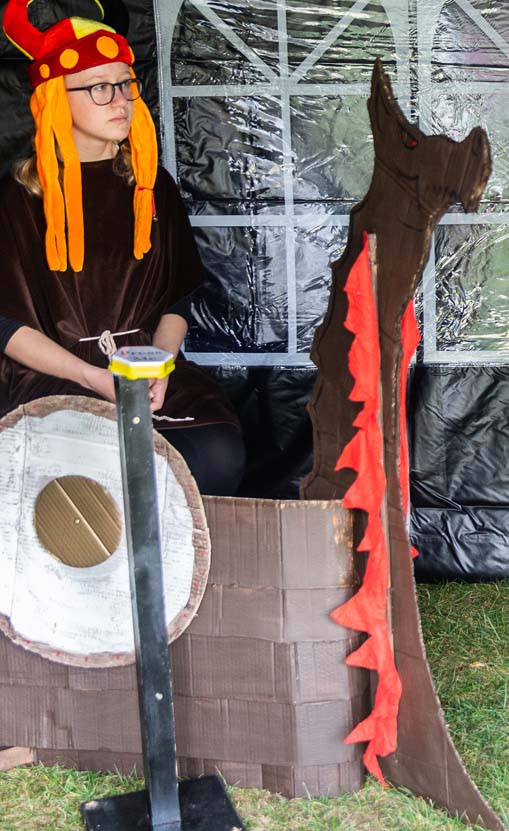
Our Parliament of Bats members Jemima Moulder and Maddie Worton also shared the viking story of Eathelfleda and the Grey sisters, alongside many more horrible history style tales in Leicesters Living Museum of Horrors.

Alice Hawkins

Location: Leicester

Time period: 1863 – 1946

The Legend:
Alice Hawkins was born in 1863. Leaving school at thirteen, she began her working life as a shoe machinist at Equity Shoes, Western Road, Leicester. The Equity factory had been formed as a workers’ co-operative and actively encouraged workers to participate in political organisations. Alice quickly realised, however, that very little could be achieved through the trade union movement to improve working conditions for women. Alice believed that women should have the right to vote and elect officials that represented women.

In 1907, Alice attended her first meeting of the Women’s Social and Political Union in Hyde Park, followed by a march the same day to the House of Commons to demand the vote for women. As a result of this action, Alice was arrested and imprisoned. Alice was imprisoned five times over seven years. Alice was even arrested for making a disturbance when Winston Churchill held a Liberal meeting at the Palace Theatre in Leicester. Unlike many suffragettes, Alice had the full support of her husband, Alfred. Alfred would also get arrested for his support of the suffragette movement.

Suffragette activity ceased at the start of the Great War in 1914 to show support for the nation. In 1918, the Representation of the People Act passed, which allowed women over 30 who met a property qualification to vote. Although 8.5 million women met these criteria, it was only about two-thirds of the total population of women in the UK. Alice would never again engage in Suffragette activities. After the war, she continued to support the local trade union and the labour movement.

Alice died in 1946 at the age of 83. Leicester immortalised Alice in 2018, with the unveiling of a statue of her in Green Dragon Square.

The Grey Sisters

They say bad luck comes in threes. Well, it certainly did for the three Grey sisters.

The Grey sisters, Jane, Mary and Katherine, were the great-granddaughters of Henry VII and cousins of Edward VI. They grew up at Bradgate Park, northwest of Leicester.

In 1553, the Grey family seemed to be set for royalty when 16-year-old Lady Jane Grey was bequeathed the throne by the sickly Edward VI. By naming Jane Grey, Edward had overlooked his Catholic half-sister Mary Lady and half-sister Elizabeth from the line of succession. Jane had great support from the Protestant elite of the country and the Privy council of England. There would be no coronation. Just nine days after Jane took the throne, Mary Tudor overthrew her in a coup that had popular support. Jane was tried for treason, convicted, and beheaded the following year.

Following the death of Mary Tudor in 1558, Elizabeth I was crowned queen. Elizabeth feared that the Protestant elite, who had backed Jane Grey as Queen, might one day overthrow her in favour of one of the remaining Grey girls. The most likely trigger would be if either Katherine or Mary were to produce a male heir. Elizabeth was determined that neither sister should marry.

However, in 1560, Katherine Grey secretly married the Earl of Hertford. Katherine soon fell pregnant, trying desperately to hide the pregnancy from Queen Elizabeth I. When Katherine was eight months pregnant, Elizabeth discovered what had been going on, sending Katherine to the Tower of London. This did not stop Katherine and the Earl of Hertford from having one more child. Sympathetic warders allowed some corridor creeping! From 1563 Katherine was banished to remote country house prisons. Katherine, separated from her sons and her husband, began to despair of ever seeing them again. A horrified jailer recorded how she gradually lost the will to live, dying in 1568, aged 28, of what looks very like a broken heart.

The remaining Grey sister, Mary, married a commoner in 1565. Mary Grey was very far from fitting the traditional idea of a princess. She was so short it has been suggested she may have been a dwarf, and the Spanish ambassador described her cruelly as ‘crookbacked and very ugly’. By marrying outside the nobility, Mary was effectively ruling herself out from challenging for the crown. She hoped Elizabeth would forgive her actions. But when gossip about Mary’s marriage reached Elizabeth, these hopes vanished. Mary was sent to a series of country house jails. The first of these was Chequers, now the Prime Minister’s country residence. She was kept in a 12ft room. In 1573 she was, at last, freed. Mary died in 1578.


Aethelflaed

THIS IS LESTER! We’ll have no Vikings here.

Born the eldest child of Alfred the Great, the King of Wessex, around 870, Aethelflaed would eventually become feared amongst the Viking rulers of England. The Vikings invaded and captured Leicester in 868, swarming down the River Soar on their longboats. Viking rule was centred on three areas; York, East Anglia and the Midlands.

In 878, Alfred the Great and his family was forced to flee to the swamps of Somerset. This was just months before Alfred stopped the Vikings from conquering further into the English mainland at the Battle of Edington. Aethelflaed, aged 16, was married to the Lord of Mercia, Aethelred. Their marriage would strengthen the alliance between Mercia and Wessex. Mercia had a strong tradition of women taking part in the life of court and administration. As her older husband’s health declined, Aethelflaed’s reputation grew. Building projects, treaties and military campaigns were conducted in her name.

When Aethelred died, probably in 911, the nobles decided his wife should become sole ruler, the Lady of the Mercians. Although her father Alfred held the Vikings back, it was Aethelflaed who liberated much of England. The Mercians went on the offensive, conducting raids deep into Viking-held lands. Over the next few years, towns like Bridgnorth, Tamworth and Stafford were fortified to secure roads and rivers.

Aethelflaed made her boldest move, seizing the town of Shearsby in Leicestershire. In 917, Aethelflaed struck east. The Viking stronghold of Derby fell to the Mercians, the army perhaps led in person by Aethelflaed. The following year, the Vikings of Leicester surrendered to the Lady of the Mercians without a fight. Even York, the nerve centre of northern Viking rule, promised to obey her command! Not long after taking Leicester, Ethelfleda died at her palace in Tamworth.

George Davenport

It’s the dandy Leicestershire highwayman who you’re too
scared to mention…

George Davenport was born in Wigston in 1759. He was the son of a wealthy farmer. However, George squandered his early opportunities in life and gained a local reputation for drunkenness. He fought in the American War of Independence but was later punished for desertion from the British army. He would desert from the army numerous times, signing up under different names, take the King’s shilling and scarper.

His life of crime would continue. Eventually, he became a highway robber, spending 18 years terrorising the Leicestershire roads. It is claimed, he robbed the rich and distributed some of the wealth among the poor of Oadby and Wigston. George often courted capture. One evening, he was drinking in an inn when he saw a poster offering a reward for his arrest. “I am George Davenport, catch me if you can” he announced to the astounded drinkers, hightailing it off the premises before anyone could follow.

Davenport’s end came when he was caught poaching a fish. The bailiff who caught him did not realise who George was at first, as he gave the bailiff a fake name. As he was being escorted to the local gaol (prison), George used his charm to convince the bailiff to buy him a drink at a tavern on the way. When they arrived at the tavern, a local greeted George by his real name, the bailiff discovered his true identity.

George Davenport was tried and convicted at the Leicester Assizes for highway robbery and fraud. It took a jury less than ten minutes to find George guilty. He was hanged on the gallows in 1797. He was buried in All Saints’ churchyard, Wigston.

Topsy Turvy

Introducing to you, all the way from Bilstone, the stolen skull of the very, very bad Topsy Turvey!

Born in 1750, John Massey lived a few miles south of Bilstone. He made his living as a farm labourer, but he was also a keen wrestler. He became known as Topsy Turvey, as John was famed for lifting a man above his head and turning him topsy-turvey. He was said to be a hard-drinking, short-tempered man.

Having returned home drunk one night, he started violently arguing with his wife, Lydia. John threw her into a river; she would later die of her injuries. Lydia’s daughter from a previous marriage tried to stop John but was thrown in the water too. The daughter escaped unharmed and would later testify against him.

John Massey was arrested, charged with murder, and sentenced to be hanged. His remains would be gibbeted to make an example of him. He was executed at Red Hill, Birstall, on the 23rd of March 1801.

The gibbet was erected half a mile south of Bilstone, on the road now known as Gibbet Lane. The body was brought to Bilstone the day after the execution. It was then wrapped with chains and hung from a metal ring fixed to the top of the post. And it stayed, as a dreadful warning to local people and passers-by, until being removed in 1818! At which point, only a partial skeleton remained.

Topsy Turvey’s skull had been stolen from the gibbet. It is rumoured to have ended up in Atherstone, Warwickshire. John Massey’s skull is still apparently stored in an Atherstone pub and is said to be displayed on Shrove Tuesday.

The weathered wooden post from which Topsy Turvey was gibbeted still stands to this day. Fortunately, it has not been used since!

James Cook

The gruesome history-making James Cook, the last man to be gibbeted in England and Wales… And no, before you ask, he’s no relation to the better known Cook family from Leicester.

By the 1830s, the punishment of gibbeting had largely fallen out of favour. The population believed it inhumane to gibbet a criminal after their public execution had been a public spectacle. But in 1832, a Leicester man named James Cook committed such a hideous crime that the Judge thought the gibbet should be used.

James Cook was a bookbinder on Wellington Street, Leicester. Cook was in debt to a Mr Paas, a London based maker of brass instruments. Paas came to visit Leicester to collect his debts, but the trip was the last he ever made. Cook murdered Mr Paas and tried to conceal the evidence of the crime by burning his body at his bookbinding workshop. The putrid smell of burning flesh caught the attention of his neighbours. When questioned by the police, Cook claimed he was innocently burning horse flesh.

Cook’s crimes deeply shocked people and were widely reported in the local and national press. In some reports, the Judge sentencing Cook had to stop at various points during the trial to shed a tear.

Cook was executed outside Leicester prison on the 10th August 1832, and his death was witnessed by vast numbers of spectators. Cook had become such a national villain that an estimated crowd as large as 40,000 witnessed the hanging. After the execution, his body was taken to the junction where Saffron Lane met Aylestone Road in Leicester. The remains were placed in a gibbet cage and suspended from a large wooden post, becoming a grim tourist attraction. Understandably, the local residents of Aylestone were not too pleased to have the gibbeted remains of a murderer displayed in their village. A newspaper report from the time stated, “Considerable annoyance was felt by persons residing in the neighbourhood of the dreadful scene”.

A petition was written to the Home Office and the gibbet was removed after a few days. Many believe Cook’s gibbeting lead to the Hanging in Chains Act, removing the punishment of gibbeting in 1834. A replica of James Cook’s Gibbet is displayed in Leicester’s Guildhall.

Daniel Lamberts Sports Day & some splatting of Rats!

A fun way of telling the tales of Daniel Lambert, The Humberstone and Bell the Giant, what better than a giant sock sack race!
Heritage tales were snuck in with puns and play on words where ever possible at the event, with games like ‘Splat the rat’ looking at Leicester’s past names and slightly interesting sanitation…

Daniel Lambert

Leicester legends don’t come much bigger than Daniel Lambert. He weighed 52st 11lbs at the time of his death.

Location: Leicester

Time period: 1770 – 1809

The Legend:
Daniel ran the Leicester gaol (prison). He was popular with the prisoners and was known to treat them very well. Once the gaol was closed, Daniel became a successful animal breeder and cockfighter. As a lad, Daniel Lambert was healthy and athletic. A good swimmer, he taught many Leicester children to swim in the River Soar. As an adult, he had an excellent reputation as a field sportsman.

He claimed his weight gain was a mystery, as he did not drink and only ate a regular amount. Modern doctors think this was not the case! Daniel was so large it is reported that he could stay afloat with two grown men on his back. He once fought a bear in the streets of Leicester. The ‘fight’ even featured in a local paper,

“Lambert struck with his left hand such a violent blow on the skull, as brought her to the ground, on which she declined the contest, and yelling, fled.”

Daniel was sensitive about his size and refused to be weighed. He was tricked by his friends, who invited him to see a cockfight in Loughborough. His carriage was driven onto scales, where the other members of the party jumped out and then calculated his weight by deducting the weight of the carriage.
To earn a living, he chose to exhibit himself as a human oddity. Daniel did not relish his peep-show existence. After five months in London, he returned to Leicester in September 1806 and lived there privately. He would later go on tour several times. In June 1809, Daniel arrived in Stamford for the races. He lodged at the Waggon and Horses Inn in St.Martins and died suddenly on Wednesday 21st June. His body had to be removed by the wall of the inn being demolishing. His coffin was built on wheels and contained 112 feet of elm wood. It took 20 men to lower Daniel into his grave.

The Humber Stone

Well, stone the crows! It’s the Humber Stone.
I’d give it a bit of a wide berth if I were you.

Location: Thurmaston Lane, Humberstone village.

Time period: Anglican Ice Age – present day.

The Legend:
Said to be Leicester’s oldest landmark, The Humber Stone has many myths and legends attached. The rock is made from syenite granite and is estimated to weigh 20 tonnes. The nearest source of syenite granite is Mountsorrel, five-and-a-half miles away. But how did it get there? Well, some tales tell of a giant throwing the rock in a thunderous rage. However, a less dramatic explanation would be glaciers transporting the stone.

The Humber Stone has had various names, such as Hellstone, Holystone, Hoston and Holston. The name Hellstone may have come from the Saxon word for death, Hela. Many of the stories surrounding the Humber Stone are dark and mysterious, perhaps a result of tales of the stone’s use as an ancient sacrificial altar.

Some claim the stone is cursed! In 1881, the stone was excavated. The geologist leading the excavation removed a large piece of the stone during his research for analysis. Not long after, he accidentally shot off half his left hand! A plough damaged the upper part of the stone between 1756 and 1766. The landowner, who had 120 acres of land, was eventually reduced to absolute poverty. He died in 1810 in the parish workhouse. In 1925, a farmer built a haystack over the stone, which mysteriously burst into flames. Once extinguished, the fire started again and burned for three days. Some villagers claimed the fire was a result of the curse of the Humber Stone! In 1980, a boy who lived close to the stone claimed to be visited at night by a demon. The boy’s grandmother then moved into the home and later claimed to be choked by the Humber Stone demon!

Not all the Humber Stone tales are negative. In the early 1900s, people with poor eyesight would bathe their eyes in water that had collected on the stone. It was rumoured this water to have curative powers.

Bel the Giant

Bel was a giant show-off. No, really. He was a giant that liked to show off.
But we have this boastful giant to thank for the placenames of a few areas North of Leicester.

Location: Leicestershire

Time period: unknown

The Legend:
No one likes a show-off, and they don’t come much bigger than Bel the Giant. He lived nearby the village now known as Mountsorrel, and was despised by the locals for his arrogance and boastfulness. Bel claimed he could reach Leicester on his sorrel mare in only three leaps.

The local farmers called his bluff and wagered all of their livestock if he could achieve this feat. Bel accepted the wager. He mounted his sorrel mare at the village now called Mountsorrel. His first leap took him high over Rothley. He landed at a spot now called Wanlip (one leap). His second mighty jump took him to Birstall. The horse’s internal organs all burst, leading to the name of Birstall. Bel forced his mare to her feet and made her jump one final time. The horse and rider landed about a mile short of Leicester, the fall killing Bel. He was laid to rest in a place now called Belgrave. There is a rhyme about the story that goes like this:

Mountsorrel he mounted at
Rothley he rode by
Wanlip he leaped o’er
At Birstall he burst his gall
At Belgrave he was buried at.

The Villages of Mountsorrel, Rothley, Wanlip and Birstall form roughly a straight line between Loughborough and Leicester. Belgrave was once a village in its own right but now is part of the city of Leicester. If Bel had made his wager today, he would have won, as he did make it into Present-day Leicester in three leaps.

Ratae Corieltauvorum

Rat-eye might not sound like the most charming nickname. Not to fear, it’s nothing to do with your funny eye’s or the amount of rats.

Location: On the banks of the River Soar

Time period: Second century BC

The Legend:
When ancient Britain was still filled with wild boar, beaver, lynx, bears and wolves, a group of people settled near to the River Soar. The descendants of Bronze Age peoples and Neolithic farmers, they built a series of huts on the east bank of the river, their settlement extending across some twenty acres. They called themselves the Corieltauvi; the closest translation of their name would be the ‘army of the land of many rivers.’ The exact name of their settlement is unknown but it contains a Celtic root word similar to ‘rath’, meaning (approximately) ‘ramparts’, which can be found in many Irish place names today. This humble Iron Age settlement is the origin of modern day Leicester.

Roman interest in this area of Britain began when they realised it was a place of strategic value; and so it became an intersection of the Fosse Way and Gartree Street. There might have been some opposition from the local Corieltauvi, but the tribesmen proved no match for the might of Rome; a fort or base was soon established on the banks of the Soar for the Legion XIV. Quite simple in plan and housing approx 500 men, the fort was surrounded by a ditch and rampart; it retained the name of the ancient British settlement but in a new, Latinised form–Ratae.

The Roman Era of Ratae was over with Rome’s withdrawal from Brittania; the early Middle Ages had begun. After the Romans departed the native Britons called the place, in their own tongue, Caer Lerion or Caerlyr; the Saxons called it Ligora-ceastre, which by Domesday became Ledecestre, and then Leicester. Geoffrey of Monmouth claimed the town’s founder was King Leir (Leir-caister), and the prefix of this name may take its origins from a Celtic water deity known as Llyr.

But.. I hear you say. Leicester does have a history of rats and poor sanitation though! Indeed it does, the city had numerous cesspits and no sewage system, meaning the population discarded all their waste in the streets and waterways. This widespread lack of sanitation caused reoccurring epidemics and vermin to be a common site in Leicester life.

Ada Lovelace’s school room
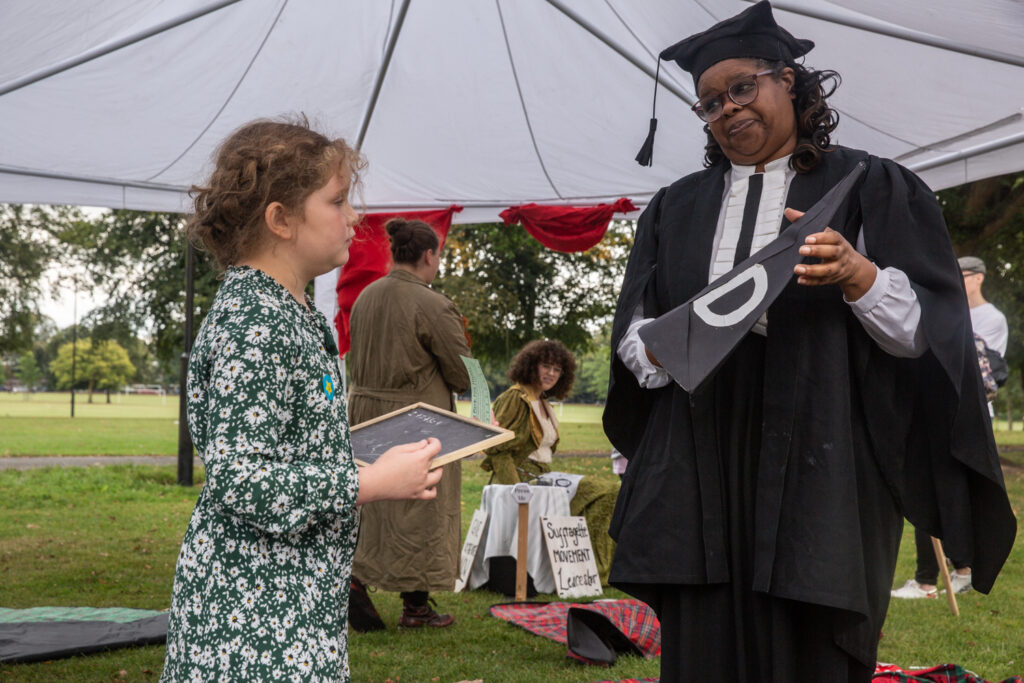
Did you know that the first computer programmer was a 19th-century woman? Ada Lovelace not only studied maths and science but excel-led at them…Yes, that was a computer software joke! Our event saw an educational Ada’s school room to test the Heritage knowledge

Ada Lovelace

In the 1800s, most women, especially the wealthy ones, did not study maths and science. But Ada Lovelace did. She was born in 1815, the daughter of the famous poet Lord George Byron and his wife, Lady Anne Byron. Weeks after Ada’s birth, Lord Byron left the family. Ada spent her early life childhood in the Leicestershire village of Kirkby Mallory.

Ada’s mother was a mathematician and was determined that Ada was taught maths and science too. When she was 17, Ada met mathematician and inventor Charles Babbage at a party. She was fascinated by his Difference Engine, an early version of the calculator. He soon became her mentor.

In 1835, Ada married William King, who became the Earl of Lovelace. They had three children, and even though most wives and mothers of the time worked only in the home, Ada Lovelace continued her work with Babbage.

In 1843, Babbage was developing the Analytical Engine, a more complicated version of the Difference Engine. He asked Lovelace to translate French text from his engineer into English. Lovelace not only translated the notes but added her own.

Some of those notes compared the design of the Analytical Engine to how weaving machines worked. Weaving machines follow patterns to make a complete design. Ada imagined that the engine could also follow patterns or what we now know as code.

Babbage did not complete the Analytical Engine, and Lovelace’s notes were forgotten. In 1953, her notes were republished in a book about digital computing that showed how computers work by following patterns. Long before the first computer was invented, Lovelace had come up with a computer language.

Lovelace died on November 10th, 1852, more than a hundred years before her notes were rediscovered. But because of her advanced way of thinking, she’s often considered the first computer programmer. In fact, in 1979, the U.S. Department of Defence named a new computer language “Ada” in her honour.

Take the Ada Lovelace School Quiz

Question 1: What were the odds of Leicester City winning the Premiership

A) 5000/1  B) 25/1  C)500/1

Question 2: How much did Daniel Lambert weigh?

A) 52 stones  B) 40 stones  C) 55 stones

Question 3: Who weighed more Daniel Lambert or Tubby Stephens?

Question 4: Which city was to blame for the Balloon riots according to the Leicester locals?

A) Nottingham  B) Manchester  C) Leeds

Question 5: How many times was Alice Hawkins sentenced to prison?

A) 5  B) Life sentence  C) 10 years

Question 6: Complete the saying “ay up me ………”

A) Robin  B) Flamingo  C) Duck

Question 7: What colour was Black Annis’s skin?

Question 8: What time did the horses come to take children away, who wouldn’t go to bed?

A) 3am  B) 9pm  C) 8.59pm

Question 9: How many people attended tubby Stephen’s funeral?

A) 200  B) 20,000  C) 20

Question 10: How many minutes did it take for the jury/judge to find George Davenport guilty?

A) 1 hour  B) less then 10 minutes  C) 7 days

Question 11: How many jumps did Bel the giant take?

A) He drove  B) 3  C) 15,000


Answers

  1. A
  2. A
  3. Daniel Lambert
  4. A
  5. A
  6. C
  7. Blue
  8. B
  9. B
  10. A
  11. B

We hope you enjoyed learning about the Heritage stories discovered within Lost Legends, the young people who were part of the production team and placements,  Taya, Maddie Payne and Georgina Payne, were involved in all aspects of the work, sharing with their community and building this interactive page on our website for the legacy of the Lost Legends stories to continue to be shared. If you’d like to see more from Georgina Paynes Black Educators project see here, or to learn more Heritage from Enter Edem, shows like ‘The Time Travel Treatment Room’ were also performed at the Lost Legends event, which you can explore the interactive online page on Victorian Mental Health here.

For more information on the music used for the project you can visit the Legends of Leicestershire website here.